Concealed
doors
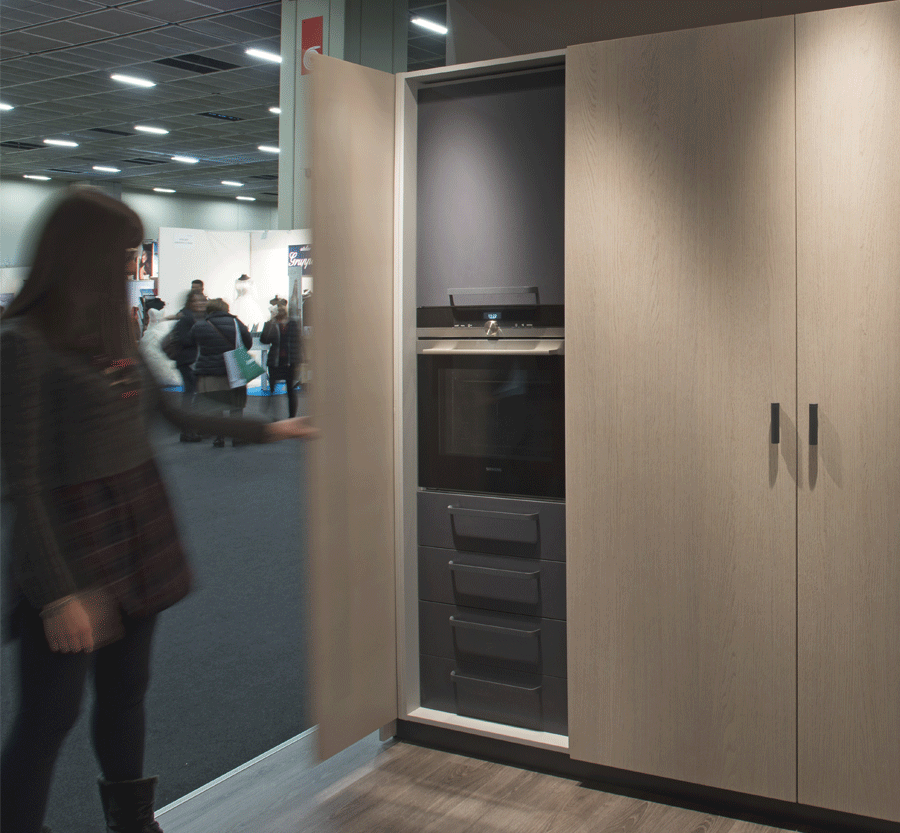
Recessed doors for the kitchen
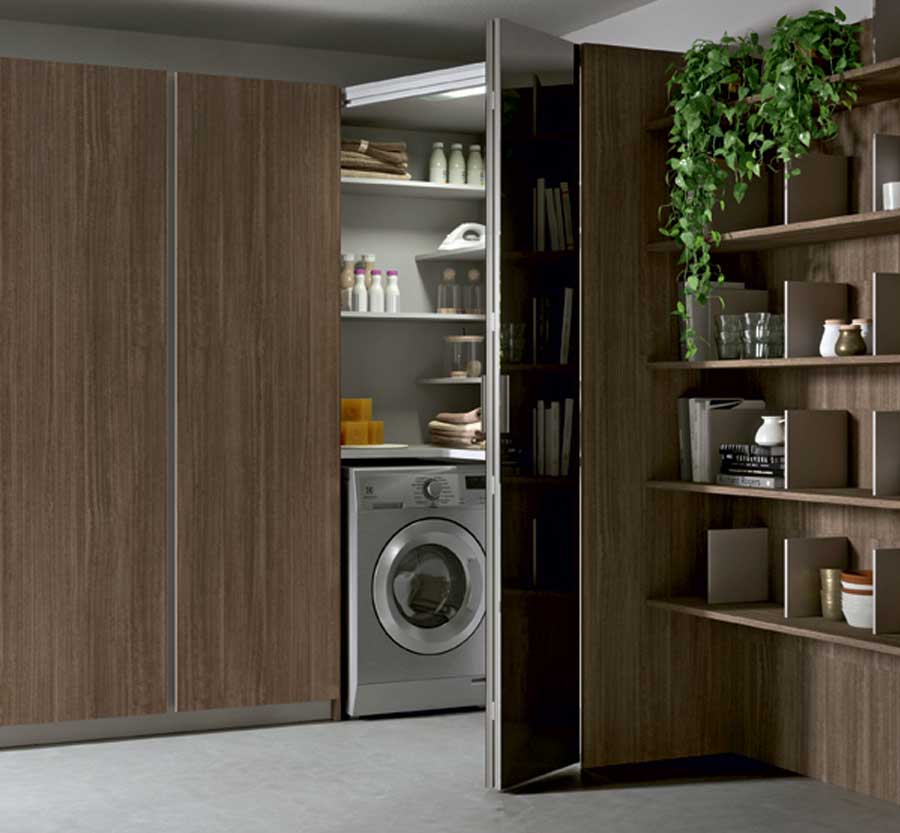
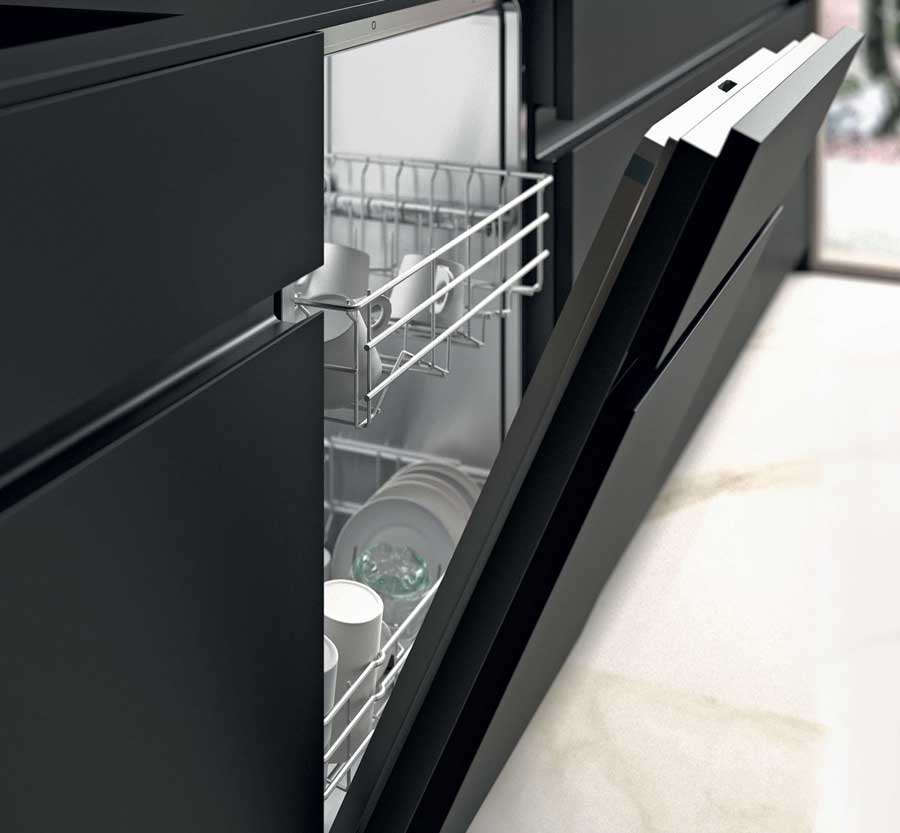
Recessed doors allow equipped kitchen columns to be concealed and accessed whenever needed. For larger areas, Hide and Seek can hide an entire kitchen behind folding doors. When closed, both solutions conceal appliances and storage behind fronts coordinated with the surrounding furniture, making them useful for kitchens that open onto the living room.
Dibiesse offers two different opening mechanisms: columns with recessed doors that swing open individually and then slide into side compartments, and Hide and Seek, with retractable folding doors.


KITCHEN COLUMNS WITH RECESSED DOORS
Kitchen columns with recessed doors can accommodate shelves, drawers and pull-out accessories, or standard cabinets such as oven housings. They bring storage and appliances together in an equipped area that can be concealed after use.
When the doors are closed, appliances and equipment remain hidden behind the fronts, contributing to the clean appearance of a minimalist kitchen.
Each recessed door swings open individually and then slides into its dedicated side compartment. Once retracted, the doors allow access to the interior without standing open in front of the cabinet.
Columns with recessed doors are available for the Emporio, Area22, Vestimi and Filo models.


HIDE AND SEEK RETRACTABLE FOLDING DOORS: A SOLUTION FOR SERVICE KITCHENS
Hide and Seek can conceal a complete kitchen, including the sink and hob. The doors fold open and then retract to the sides, leaving access to the kitchen unobstructed.
This solution can be used at home or to create a service kitchen in offices and meeting rooms, where equipment is revealed only when needed. When the doors are closed, the working area is hidden behind the fronts.
BEYOND THE KITCHEN: UTILITY AREAS AND COAT STORAGE
Hide and Seek can also conceal a utility area with dedicated equipment or a wardrobe compartment.
In the Dibiesse showroom, for example, this structure has been used to create a space for coats. The purpose of the compartment and its internal fittings are defined according to the requirements of the project.
Hide and Seek requires a project assessment and a dedicated quotation through the retailer.
Other smart solutions








Dibiesse Cucine Spa|
All rights reserved|
P.I. 00313850265


